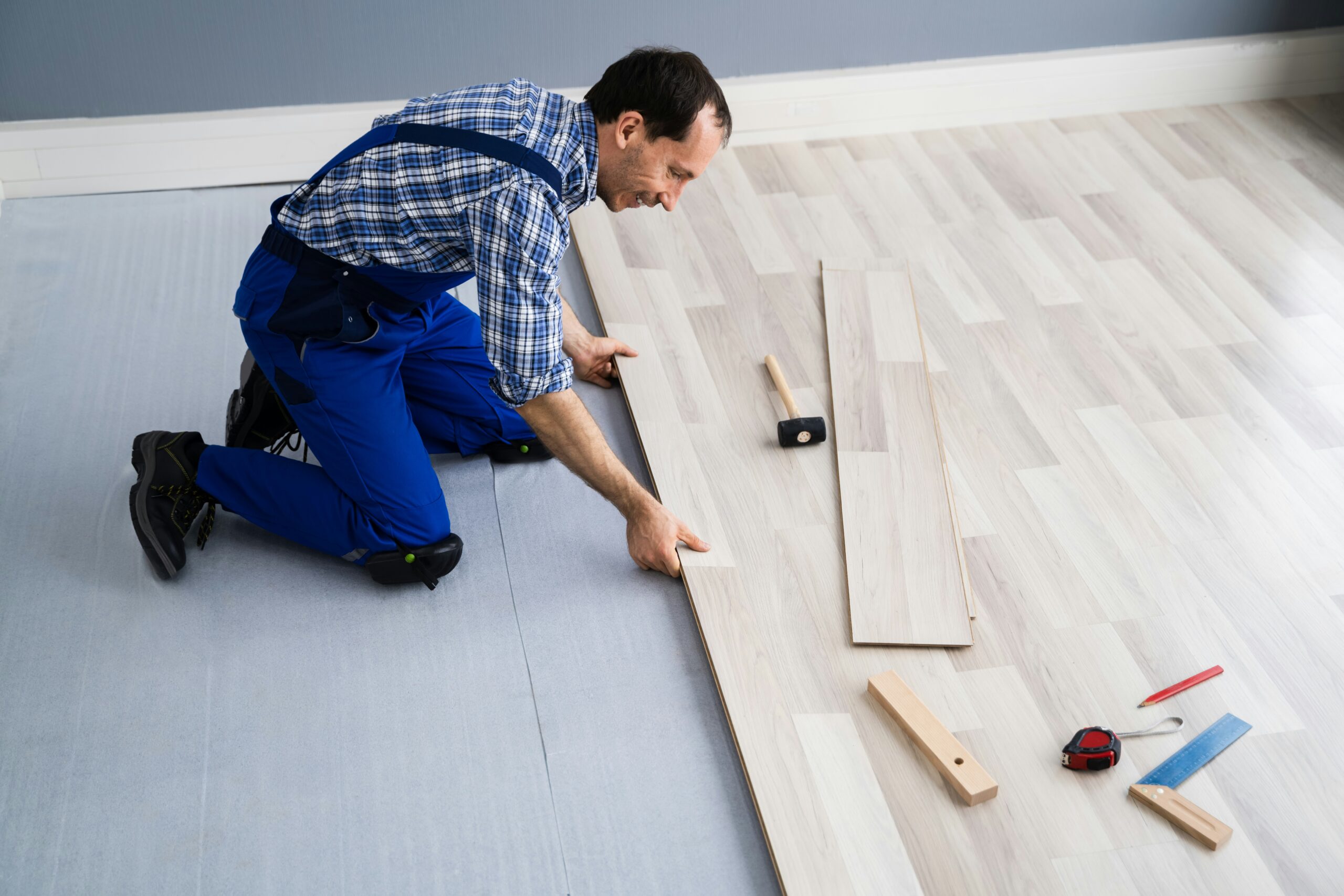
When you ask three flooring experts in Philadelphia which method of hardwood to be installed and you might get three different opinions -- not because they have a wrong answer, but because the correct installation method genuinely depends on the particulars of your home. The type of subfloor used, the floor's height, the wood species, the moisture conditions, and your long-term plans to the area all play into the decision. Most homeowners discover this later which is the reason it's crucial to know the difference before you begin getting estimates. Here's how each method actually performs and how each is logical.
1. Nail-Down is the standard for Solid Hardwood
Nail-down installation -- sometimes known as staple-down fixing each plank mechanically to the subfloor using an pneumatic nailer. This is the oldest method of installation and the most used method of installing solid wood in Philadelphia houses with either plywood or OSB subfloors. It's strong and the floor feels solid underfoot and there's nothing to break over time. Most flooring contractors will default to nailing down solid hardwood for subfloors with above-grade wood floors without hesitation.
2. Your subfloor can determine if nailing down Is a Possibility
It is necessary to have a wood-based subfloorthat is a complete stop. Concrete slabs are common in basements as well, as in some ground floor spaces of Philadelphia homes and Delaware County ranches, cannot be used with staples or nails in any way. If the subfloor is made of concrete nail-down is off your list, regardless of the flooring material you'd like. A certified flooring installer will quickly spot this problem during a survey of the site. A novice person might not be able to spot it until the job has already begun.
3. This Glue-Down Technique Opens Up Concrete Installations
Installing hardwood using glue-down uses a spread adhesive that's applied to the subfloor before planks are put in place. It's the method of choice when you need real hardwood over concrete -- basements in Montgomery County colonials, ground-floor slabs found in newer South Jersey construction, or any area where nailing down isn't an option. If it's done correctly, a glued-down flooring is extremely sturdy and has very little flex. The downside is that removal later is significantly more involved that removing a stapled flooring or floating one.
4. The floating Hardwood Doesn't Connect to the Subfloor at All
Floating installations mean that the planks join at the edges and rest on the top of the subfloor as one surface that moves as one unit instead of being fixed. It's easier to install, less difficult to take off, and less prone to damage from subfloor imperfections than nail-down. Engineered hardwood is the most common option for floating in Philadelphia -- its layered structure can handle the slight sway caused by floating more effectively than solid wood.
5. Floating floors give you a distinctive Feel beneath the feet
This is something that visits to showrooms do not always convey. Floating hardwood has a subtle feeling of movement when you walk upon it. It's not overpowering however noticeable when compared to a nail-down floor, which is secured right to the subfloor. For most homeowners it's a matter of course. Certain homeowners, particularly those who have upgraded from nail-down hardwood, it takes adjustments. If this is something you're concerned about have a flooring expert ask for the floor on a floating sample prior to beginning to commit.
6. Nail-Down is the most labor intensive Prices of the three
From a strict installation perspective nail-down hardwood is the one that requires longer and requires more skill this is evident in the labor rates you'll see from Philadelphia flooring contractors. The subfloor must be spotless straight, flat, and thick. The planks must be acclimatized. The nailer should be careful to avoid splitting. Flooring contractors who nail down well earn a good profit. If you're presented with a cheap hardwood installation quote, it's worth asking specifically which method they'll use to fasten it.
7. The Glue-Down process adds cost to the material but saves on some work Variables
Adhesive isn't cheap, as is glue-down, and requires the right product matched to the specific hardwood and subfloor combination. But, glue-down installations on a concrete slab that is well-prepared can be more effective than nailing over subfloors that need substantial repair. Flooring contractors throughout Bucks County and Delaware County commonly recommend glue-down when installing engineered hardwood for slab-on-grade homes specifically since it brings real aesthetics of wood with practical advantages.
8. The Moisture Test should be performed prior to Any Method is Decided
This step is typically skipped over on budget jobs, and leads to issues in the course of a year. Concrete slabs exude moisture vapor which can cause glue-down adhesive to fail, and the floors floating to break. Wood subfloors in older Philadelphia rowhomes can be subject to excessive moisture from crawlspaces or inadequate ventilation. A proper moisture reading before installation isn't an option -it's how a reputable flooring contractor decides what method is safe and what prep work is needed first.
9. Refinishing compatibility varies by method
Solid wood that has been nail-down is able to be sanded and refinished multiple times over its lifetimethis is one of the most compelling reasons to choose it despite the more expensive price of installation. Engineered wood that has been glued down is typically able to be refinished at least once based on the thickness of the wear layer. The floating engineered hardwood could be less refinishable. If a long-term plan for wood floor repair is one of your goals it is important to take into account this method decision before installation, not later.
10. The best method is a Site Decision, Not a Preference A Decision
homeowners may come to the flooring consultation with a firm idea of what installation method they'd like. Experienced flooring installers in Philadelphia will gently reorient the conversation toward what the specific home actually supports. The top flooring contractors aren't offering a pre-determined method- they're reading your subfloor, your moisture levels at your floor, along with the type of wood and will recommend accordingly. That site-specific judgment is exactly what differentiates a certified professional and someone who owns nailers. Check out the best
hardwood floor installation Philadelphia for site recommendations including hardwood floor installation Bucks County, nail down hardwood flooring Philadelphia, tile flooring installation Philadelphia, hardwood floor installation cost Philadelphia, laminate flooring installation Philadelphia PA, hardwood floor installation cost Philadelphia, flooring estimate Philadelphia, best flooring contractors Philadelphia, porcelain tile installation Philadelphia, laminate flooring installation Philadelphia PA and more.
/GettyImages-471038610-5c68585546e0fb0001917173.jpg)
How Do You Find A Flooring Contractor Who Is Licensed? Contractors In Philadelphia
Finding flooring contractors in Philadelphia is a breeze. Locating a certified, insured and skilled contractor who will still be in touch six months after the project if anything goes wrong -- this is what takes serious effort. The Philadelphia metro has a broad variety of flooring installers who are established and have years of local experience, reputable independent operators with experience, and many unlicensed businesses that compete on price alone and disappear when issues arise. Bucks County, Montgomery County, Delaware County, and South Jersey all have their distinct local contractor systems with similar quality. This is how you can navigate it without the hassle of learning it.
1. Understand What Licensing Actually Means in Pennsylvania
Pennsylvania has a requirement for home improvements contractors, including flooring installers -- to register at the Attorney General's Office under the Home Improvement Consumer Protection Act. This is distinct from an occupational license and is the legal minimum, not a certification of high quality. Any flooring company operating in Philadelphia or in the nearby counties that doesn't have the required registration is already operating in violation of law before they've even touched your flooring. You can check registration status through the Pennsylvania Attorney General's site before any contractor is allowed to enter your home.
2. Insurance is non-negotiable. It's also easy to verify
General liability insurance is a protection for your property in case a contractor causes damage to it during the installation. Workers' compensation coverage protects your property from liability if anyone is injured on your property while working. Both policies should be current as well as verifiable. Check with any flooring service you're seriously considering for an insurance certificate, not their declaration that they've got it, an actual proof of insurance with their name and policy number. Trustworthy flooring companies check the document often and won't delay in requesting it. Contractors who resist or stall on this request are telling them something vital.
3. Local Reviews Tell You More Than Star Ratings
A flooring contractor who has an 4.8 average rating, and over 200 review on Google is a more reliable signal than one that has scores of 5.0 rating and only 11 review. Look through the review's text and not just their stars. Particularly look for references to the process used to resolve problemsevery contractor will have jobs that don't go as planned, and the ones worth hiring are the ones who have shown up, communicated and fixed the issue. Philadelphia flooring reviews that mention specific neighborhood, floor types and outcomes of projects are more trustworthy than generic five-star praise. Cross-reference across Google, Yelp, and the BBB for a better picture.
4. Find out more about the experience of Your Floor Type
Flooring is not a specialized trade. The contractor that has put in LVP in a home with 500 rooms may be unfamiliar with nail-down solid hardwood, glue-down engineered hardwood over concrete or large-format porcelain tiles. If you're requesting estimates for hardwood flooring in Philadelphia make sure you ask how many similar jobs they've worked on in the past calendar year. You can also find a recent referral. Contractors who can be confident in their experiences are able to answer this question. If they respond with general statements are worth examining more carefully.
5. The free estimate reveal More Than the Quote
A reputable flooring service in Philadelphia must provide a complimentary estimate, which includes a visit to your home. The quality of the visit -- how well they analyze the subfloor and whether they inquire about the history of moisture and the clarity with which they explain their work scope you more about the service than the number they write down towards the conclusion. A contractor who takes at least 45 minutes studying your space and asking detailed questions is different from one who enters, measures the room and then gives you a number in 10 minutes, without looking below the current surface.
6. Take three items of information from three different quotes prior to making a decision.
Three quotes is the minimum required for any flooring installation project in Philadelphia that's significant in size. More important than the amount is what each quote includes: subfloor preparation demolition and removal of materials of transition strips, baseboards furniture removal, as well as cleaning up after installation. Quotes that list a single price per square foot, with no further breakdown invite customers to check out what the line items are later, during the process, with less influence. Itemsized quotes allow you to compare contractors on equal terms instead of comparing a contractor's total cost with another's floor-to-floor price.
7. Neighborhood Reputation Still Carries Real Impact in Philadelphia
The Philadelphia metro -- city suburbs, inner-ring suburbs and counties out towards Bucks and Delaware -- is relationship-driven and still has a significant impact for tradesmen's work. A simple survey of neighbors, block clubs, or local community Facebook groups to name the companies they've utilized and trusted to install flooring at their home the result that no search engine results. A flooring contractor who has been a good choice on your block or your township is a person with a local reputation that they can protect in a different way which a contractor from elsewhere in the region does not. This referral network, which is informal, is not widely used, but it's incredibly valuable.
8. Watch out for the Patterns that License-Free Operators Copy
Certain types of behaviors are linked to contractors who have cut corners in licensing and insurance. Pay with cash only. The inability to provide a written contract. Quotes provided verbally without putting it written. There is no physical address for business with only a cellphone number. It's time to make a fast decision before the price increases. Subcontractors who show up on installation day with no connection to you and who were not included in the estimate. This alone isn't absolute, but there are two or more that appear together must be a reason to add them to your list of verified flooring contractors.
9. Cross-County searches expand your options Without sacrificing Quality
A few of the top flooring installers that serve Philadelphia is located in Montgomery County, Delaware County as well as South Jersey and work across the metropolitan area frequently. By limiting your search to the Philadelphia city contractors can limit the options. What matters is their familiarity with the housing stock of Philadelphia including rowhomes, older subfloor conditions, typical water issues -- as opposed to which side of city line their business is on. The Bucks County flooring contractor with well-established Philadelphia references is definitely worth a call.
10. A written agreement protects both Parties and Defines the Task
Before you begin any work, you should have a signed contract that outlines the flooring material's name, brand and product name and the method of installation, the scope of subfloor preparation, the timeline for payments, the timetable, and what to do should hidden subfloor damage is discovered during the course of work. Contractors who are licensed to install flooring use contracts in accordance with standard practice. The contract isn't a signal to show distrust; it's the document that helps keep a positive working relationship when something unexpected happens between the first day after installation until the final walkthrough. Have a look at the recommended Read the top rated luxury vinyl plank installation Philadelphia for blog tips including LVP flooring contractors Philadelphia, affordable flooring installation Philadelphia, wood floor restoration Philadelphia, nail down hardwood flooring Philadelphia, flooring installation Montgomery County PA, flooring contractors Montgomery County PA, flooring contractors Montgomery County PA, tile flooring installation Philadelphia, flooring installation near me Philadelphia, flooring estimate Philadelphia and more.